Creative Partnerships That Don't Blow Up: A Practical Guide to Collaborating on Your Terms
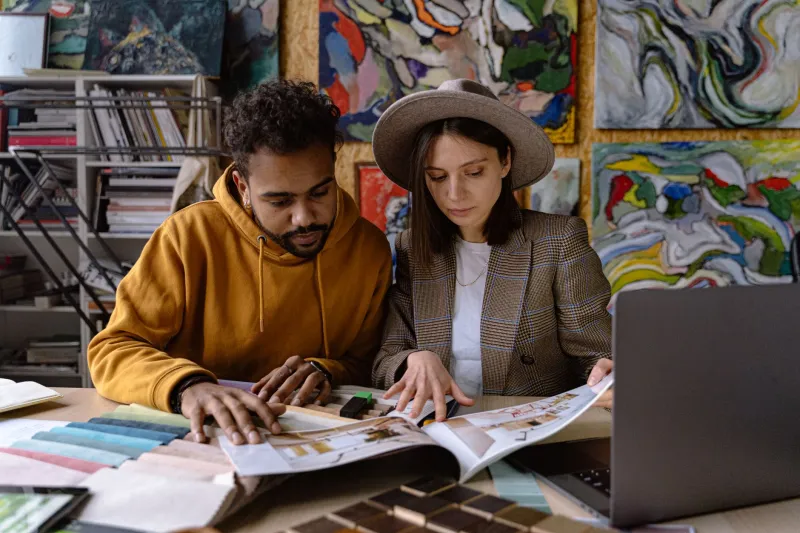
Every major entertainment career has a collaboration story somewhere in its origin. Spielberg and Lucas trading ideas. Jay-Z and Kanye making Watch the Throne while navigating two enormous egos in the same room. Tina Fey and Lorne Michaels building something at SNL that neither could have created alone. The mythology of creative partnership is genuinely compelling — two visions combining into something greater than either could produce independently.
What the mythology tends to skip is the part where those partnerships almost fell apart. Or the ones that did fall apart, loudly and expensively, taking careers and friendships down with them.
Collaboration in entertainment is one of the most powerful tools available to a working creator. It's also one of the most reliably mishandled. Here's how to approach it like someone who's thought it through.
Know What You're Actually Looking For Before You Start
The first mistake most creators make when pursuing collaborations is approaching them reactively — saying yes to whoever shows up with enthusiasm and a complementary audience, without stopping to ask whether this person actually serves the work.
Before you start any conversation with a potential collaborator, get specific about what you need. Are you looking for a co-creator who shares creative ownership? A featured partner who brings their audience to your platform? A service provider with creative input? A strategic ally for distribution or cross-promotion? These are fundamentally different relationships, and conflating them is where the trouble starts.
Be honest about your own gaps, too. If your production quality is strong but your on-camera presence is weak, you might benefit from a partner who's a natural performer. If your ideas are compelling but your distribution is limited, a collaborator with an established audience can accelerate your reach dramatically. The best partnerships are built on genuine complementarity, not just mutual admiration.
One useful exercise: write down the three things a collaboration would need to deliver for you to consider it a success. If you can't articulate that before the first conversation, you're not ready to be negotiating one.
The Conversation Nobody Wants to Have (But Absolutely Must)
Creative people are often terrible at talking about money, ownership, and credit. It feels mercenary. It disrupts the vibe of creative excitement. It can feel like you're anticipating failure before you've even started.
Have the conversation anyway. Have it early. Have it in writing.
The specific things you need to establish before any collaborative project begins:
Creative control. Who has final say on creative decisions? Is it one person, or is it genuinely shared? If it's shared, what's the process for resolving disagreements? A vague answer here will cost you later.
Intellectual property. Who owns what gets created? If the collaboration produces a format, a character, a brand, or a piece of content with ongoing commercial value, both parties need to understand their stake in it clearly. An entertainment lawyer can draft a simple co-creation agreement for a few hundred dollars. That's cheap compared to a dispute over a successful project.
Revenue split. If the collaboration generates money — through sponsorships, ticket sales, streaming revenue, merchandise — how is it divided? Spell this out explicitly, including how expenses are handled before revenue is split.
Credit and attribution. This matters more than most people admit. Establish publicly how both parties will be credited across all platforms and promotional materials. Ambiguity here breeds resentment.
Exit terms. What happens if one party wants to walk away? What can each party do with the work independently after the collaboration ends? Nobody wants to think about this at the beginning, but you absolutely need to.
Protecting Your Creative Vision Without Being Precious About It
Here's a tension that every serious creator navigates in collaboration: the difference between protecting your artistic vision and being so territorial that you can't actually benefit from a partner's perspective.
The healthiest collaborative relationships operate with what you might call a creative constitution — a shared understanding of the non-negotiables. These are the elements of your work that define its identity and cannot be compromised. Everything else is negotiable.
For a filmmaker, the non-negotiables might be tonal consistency and final cut. For a podcast host, it might be editorial independence on guest selection. For a musician, it might be maintaining control over the master recordings. Know yours before you walk into any partnership.
Beyond the non-negotiables, stay genuinely open. The whole point of collaboration is that another perspective can improve the work. If you find yourself fighting every suggestion a collaborator makes, you're either working with the wrong person or you're not actually ready to collaborate — you want a validator, not a partner.
Choosing the Right People: Signals That Matter
Talent and audience size are obvious criteria for collaboration. Here are the ones that actually predict whether a partnership will work:
Reliability. Does this person follow through on commitments? Do they respond to messages in a reasonable timeframe? Small reliability signals in early conversations predict big reliability patterns in actual projects.
How they talk about past collaborators. If someone describes every previous creative partnership as a situation where they were undervalued or taken advantage of, take note. That pattern tends to follow people.
Alignment on pace and process. A creator who works in intense bursts and a creator who needs slow, methodical development will clash constantly, regardless of how much they respect each other's work.
Shared standards for quality. You don't need identical aesthetics, but you do need a similar threshold for what constitutes work that's ready to release. Mismatched quality standards are one of the most common collaboration killers.
Building Partnerships That Grow
The best creative collaborations in entertainment aren't transactions — they're ongoing relationships that evolve as both parties grow. That means checking in, recalibrating agreements as circumstances change, and being willing to renegotiate terms when the collaboration's value shifts significantly for either party.
It also means celebrating shared wins genuinely and publicly. In an industry where attention is currency, crediting your collaborators generously costs you nothing and builds the kind of reputation that attracts better partners over time.
Your creative vision doesn't have to be a solo endeavor to remain yours. The right partnerships amplify what makes your work distinct — they don't dilute it. But that outcome requires intention, clarity, and the willingness to have the uncomfortable conversations before they become unavoidable.